 EngineeringLOAD PATH · HERO DIAGRAM
01The old assumption
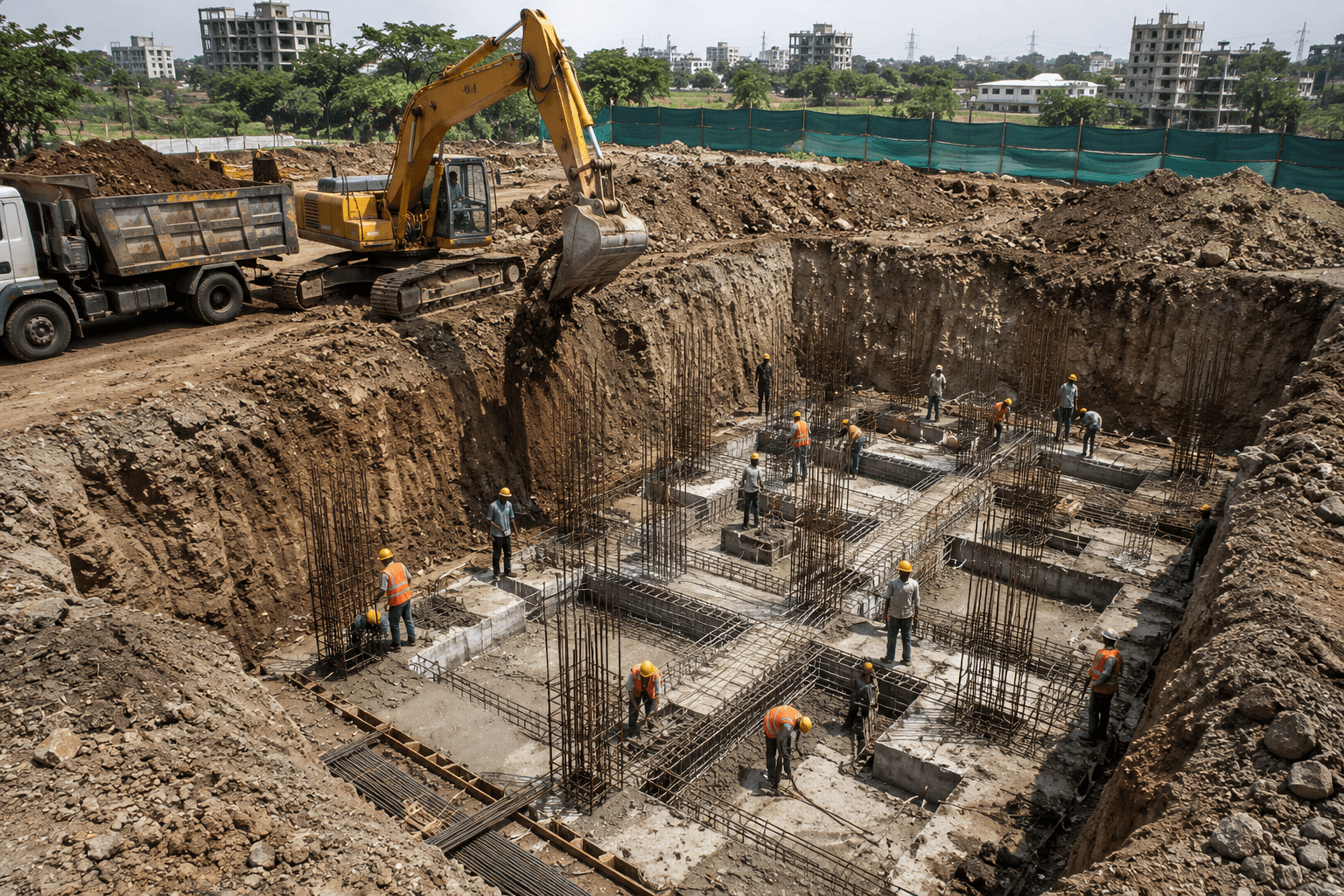
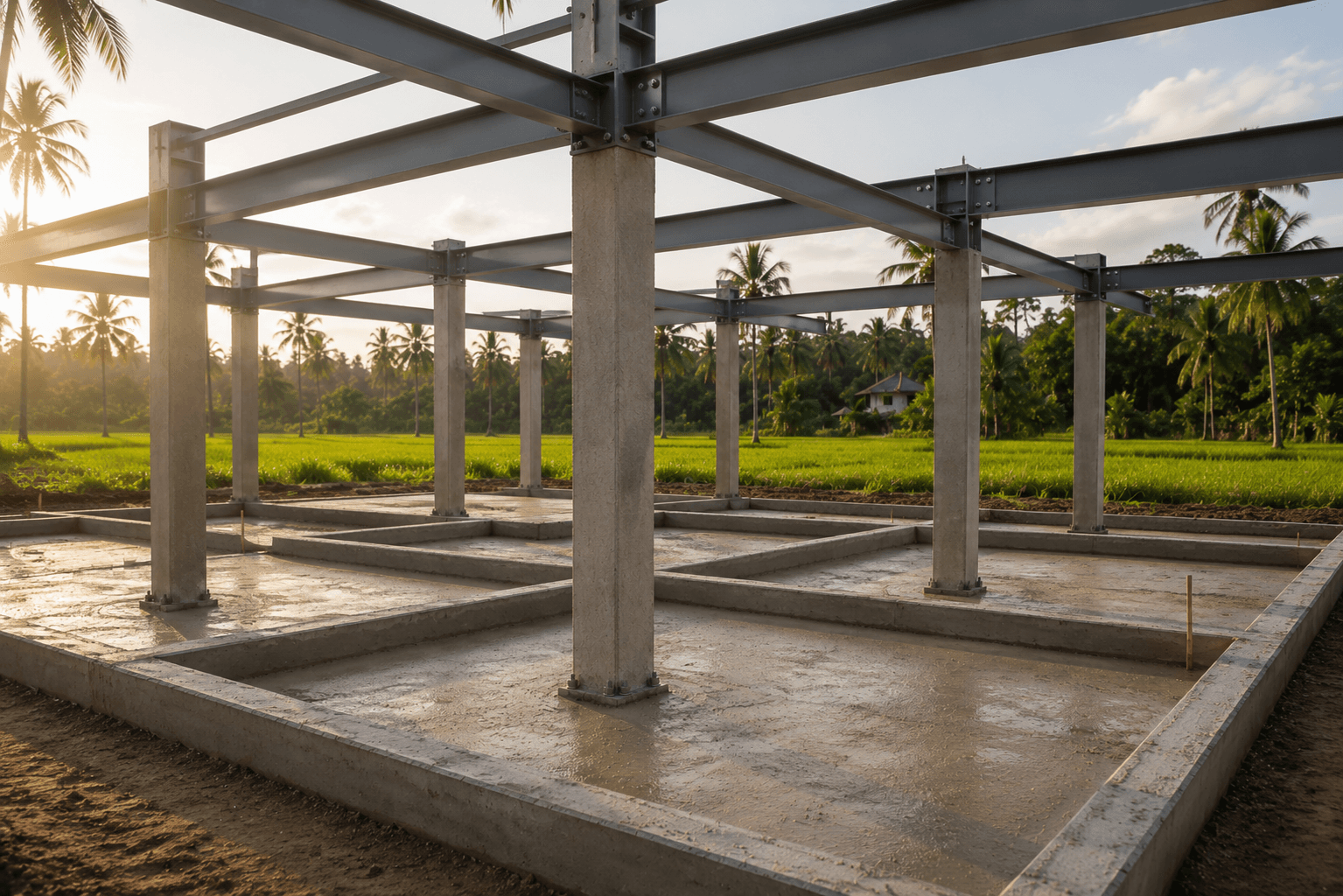
Conventional footings work by mass — enough concrete, deep enough, that the building simply outweighs any force trying to move it. It is a brute-force solution, and it is why footings take weeks: mass needs time to cure into strength.
02The alternative
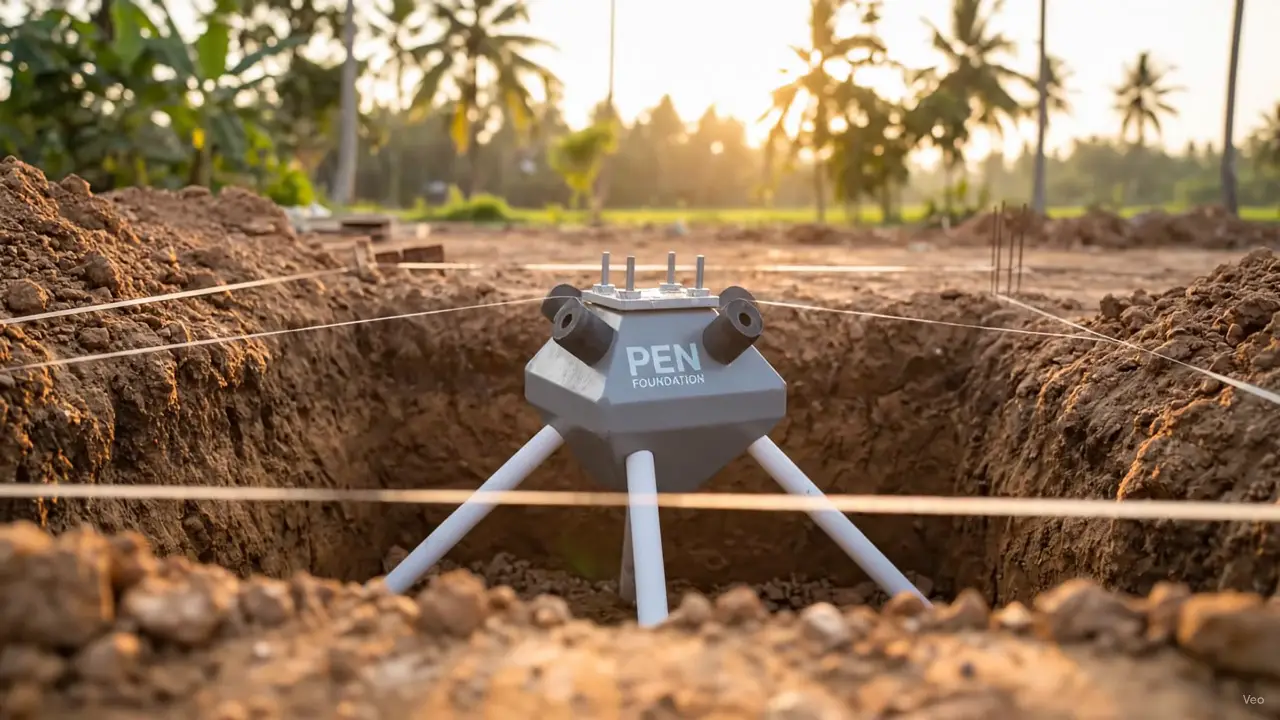
A helical nail set at an angle resists load the way a tent stake resists wind — through anchorage in the surrounding soil, not raw weight. Four nails at opposing 26° angles create a cone of engaged soil beneath the structure.
A footing resists load by being heavy. A nail resists load by being anchored.
03What this changes on site
No cure time means no waiting. The structure can load the foundation within hours of installation, not weeks.