Skip to content
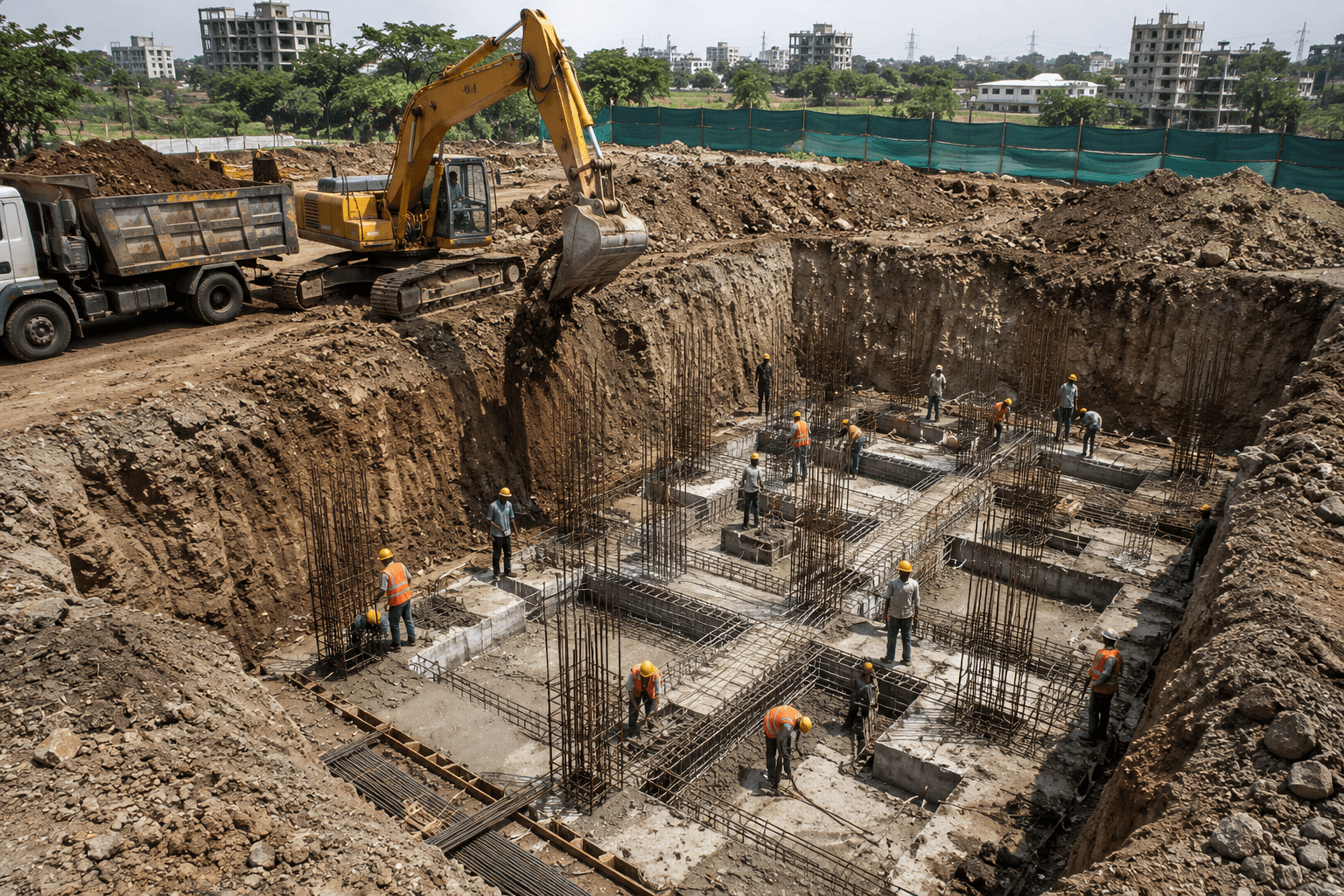
An excavator digging a deep pit for a conventional reinforced-concrete foundation

About PEN Foundation

We questioned the one thing construction never did.

For decades, buildings have become taller, smarter, and more efficient. Yet the foundation beneath them has largely remained unchanged.

Where it began

PEN Foundation began with a simple belief: if every part of construction continues to evolve, the foundation should too.

That belief became years of research, engineering, testing, and real-world validation.

  1. [ 01 ]

    Every revolution begins with a question.

    For centuries, foundations have relied on excavation, concrete, curing time, and extensive site preparation. While construction technologies advanced rapidly above the ground, the process below it remained largely unchanged. We did not begin by asking how to build a better foundation — we began by asking whether the assumptions behind conventional foundations were still necessary.
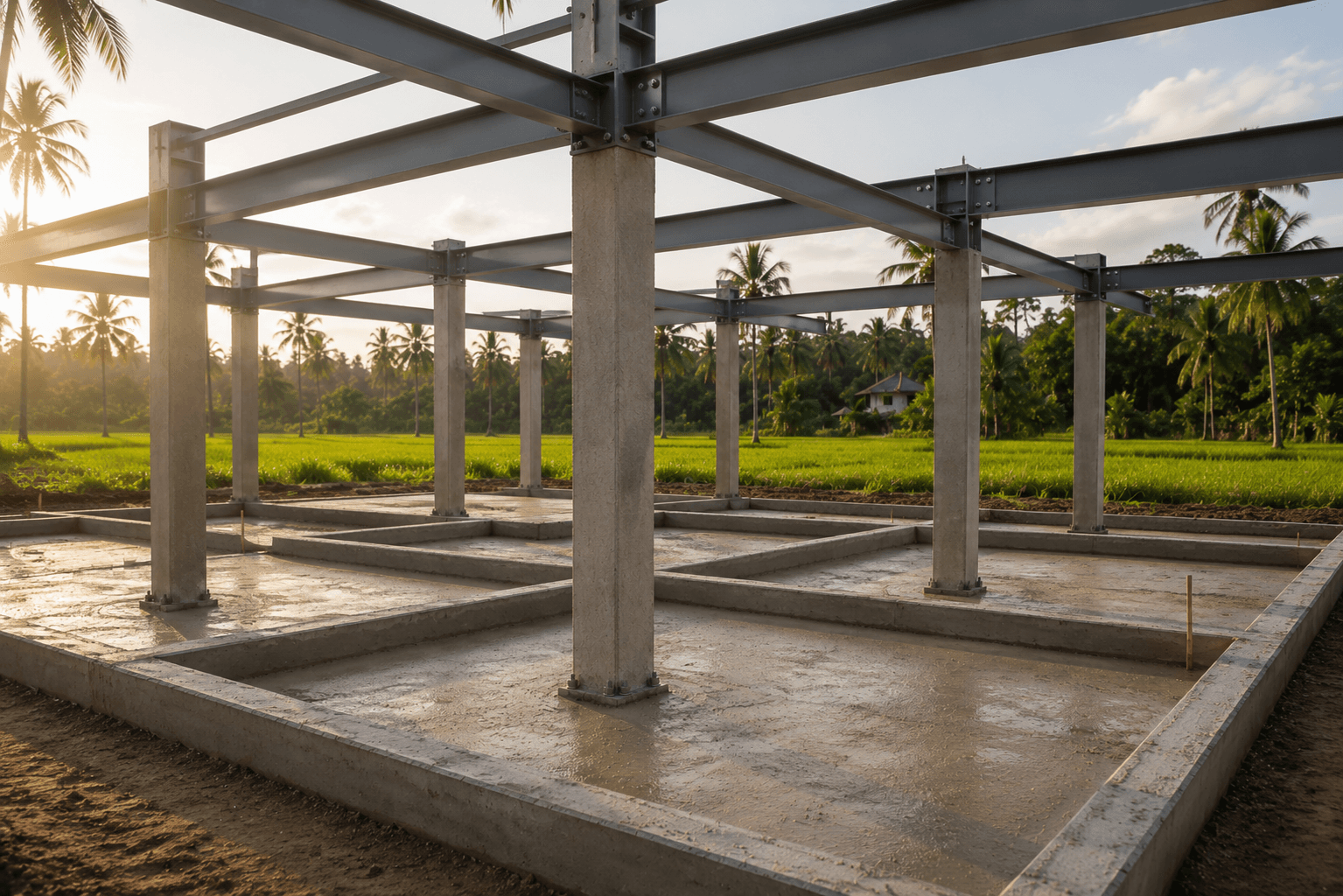
    Concrete columns and steel beams rising from a slab among palm trees
  2. [ 02 ]

    Nature solved this problem long before we did.

    Tree roots distribute loads efficiently, adapt to changing soil conditions, and stabilize structures without disturbing the surrounding environment. Instead of forcing the ground to adapt to our designs, we asked how engineering could learn from nature’s own foundation system. That principle became the core inspiration behind PEN Foundation’s biomimetic design.
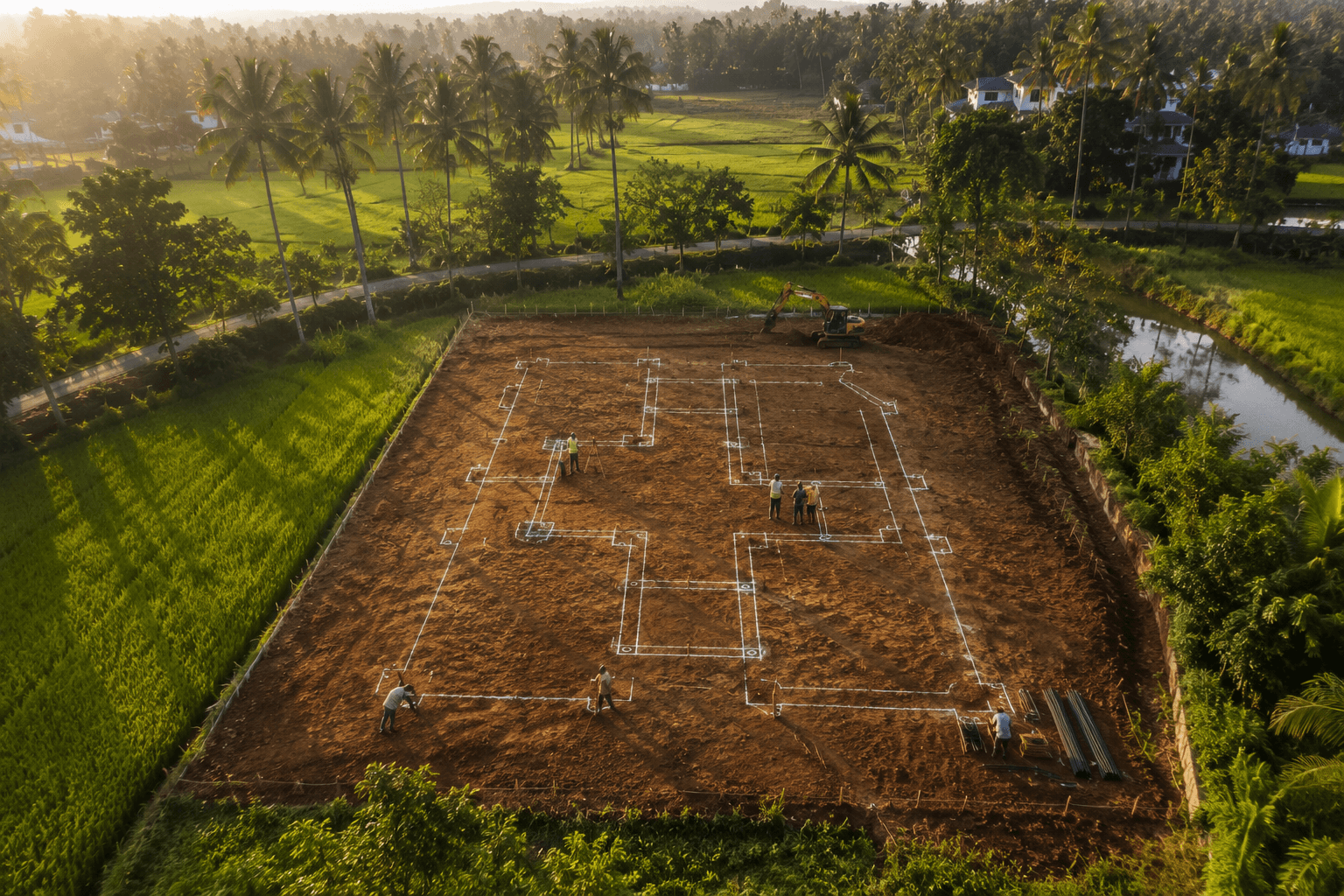
    Aerial view of a cleared plot set out with string lines, paddy fields either side
  3. [ 03 ]

    Innovation is only meaningful when it is proven.

    Every engineering decision demands evidence. Every claim demands validation. Every innovation demands trust. PEN Foundation has progressed from question to research, prototype, patent, testing, and field validation — supported by academic collaboration, simulation, and independent assessment.
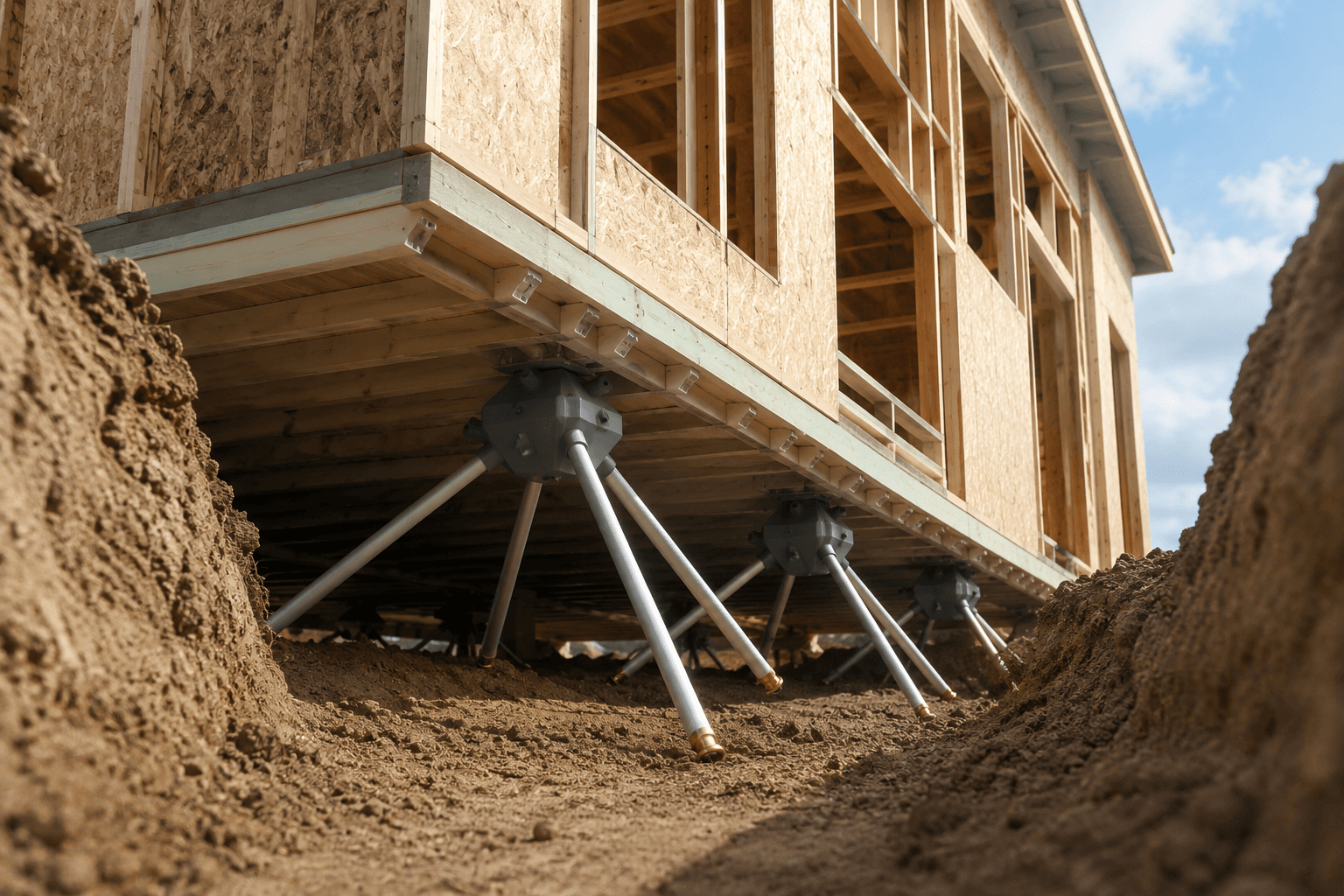

    PEN Foundation system installed and validated on site
Story & values

The story behind PEN Foundation

Traditional foundations force the ground to accept the structure. PEN Foundation works with the natural behaviour of the soil to create a stable load-transfer system inspired by biological root networks. What began as a question about excavation became years of research, prototyping, patenting, and field validation.

We do not believe innovation ends with a better product. We believe innovation begins by questioning assumptions that have been accepted for generations. PEN Foundation represents a different way of thinking about construction — one that values engineering, sustainability, and continuous improvement equally.

Our Value

The foundation stops being the thing your programme waits for.

A cast-in-situ footing has to be dug, formed, poured and then left alone for 21 days before anything can be built on it. PEN Foundation is driven in about two hours, carries structural load immediately, and moves no soil at all — which changes the programme, the spoil bill and the carbon line at the same time.

  • 01

    Load-bearing the day it goes in

    Driven, not poured. There is no formwork to strike and no curing window to schedule around, so the frame can follow the foundation crew across the site instead of waiting three weeks behind it.

    per foundation point
    ~2 h
    of curing
    0 days
  • 02

    The ground is left where it is

    Four battered nails transfer load through skin friction, so soil stratification and groundwater flow survive the install. The resulting enhancement factor is field-validated at NIT Calicut.

    of spoil avoided
    2–3 m³
    SBC enhancement
    2.0–2.6×
  • 03

    Less concrete, and you get it back

    The system carries the same loads on a fraction of the material, and its components are recoverable at end of life rather than buried in the ground they were poured into.

    less concrete
    80%+
    CO₂ avoided per point
    106 kg
The People Behind PEN

Engineering innovation through multidisciplinary expertise

PEN Foundation is the result of collaboration between professionals with experience in structural engineering, construction, research, and product development. Together they share a common vision: redefining foundation engineering for the next generation of infrastructure.

  • Portrait of Jeesh Venmarath

    Founder & CEO

    Jeesh Venmarath

    Twenty-five years of designing structures revealed the same pattern on every project: foundations consumed time, resources, and opportunity. Instead of accepting that as normal, he asked whether there was another way. That question eventually became PEN Foundation.

  • Portrait of Kala CP

    Co-Founder & CTO

    Kala CP

  • Portrait of Hemanth Chodisetti

    Co-Founder & CGO

    Hemanth Chodisetti

Research & Industry Ecosystem

Supported by research, strengthened through collaboration

The development of PEN Foundation has been shaped through collaboration with academic institutions, research initiatives, industry experts, and innovation ecosystems. These partnerships have helped transform an engineering concept into a validated construction solution.

FAQ

Questions about PEN Foundation

  • Why was PEN Foundation started?

    For decades, buildings have become taller, smarter, and more efficient. Yet the foundation beneath them has largely remained unchanged. PEN Foundation began with a simple belief: if every part of construction continues to evolve, the foundation should too. That belief became years of research, engineering, testing, and real-world validation.

  • What inspired the design?

    Tree roots distribute loads efficiently, adapt to changing soil conditions, and stabilize structures without disturbing the surrounding environment. Instead of forcing the ground to adapt to our designs, we asked how engineering could learn from nature’s own foundation system. That principle became the core inspiration behind PEN Foundation’s biomimetic design.

  • How does PEN Foundation think about innovation?

    We do not believe innovation ends with a better product. We believe innovation begins by questioning assumptions that have been accepted for generations. PEN Foundation represents a different way of thinking about construction — one that values engineering, sustainability, and continuous improvement equally.